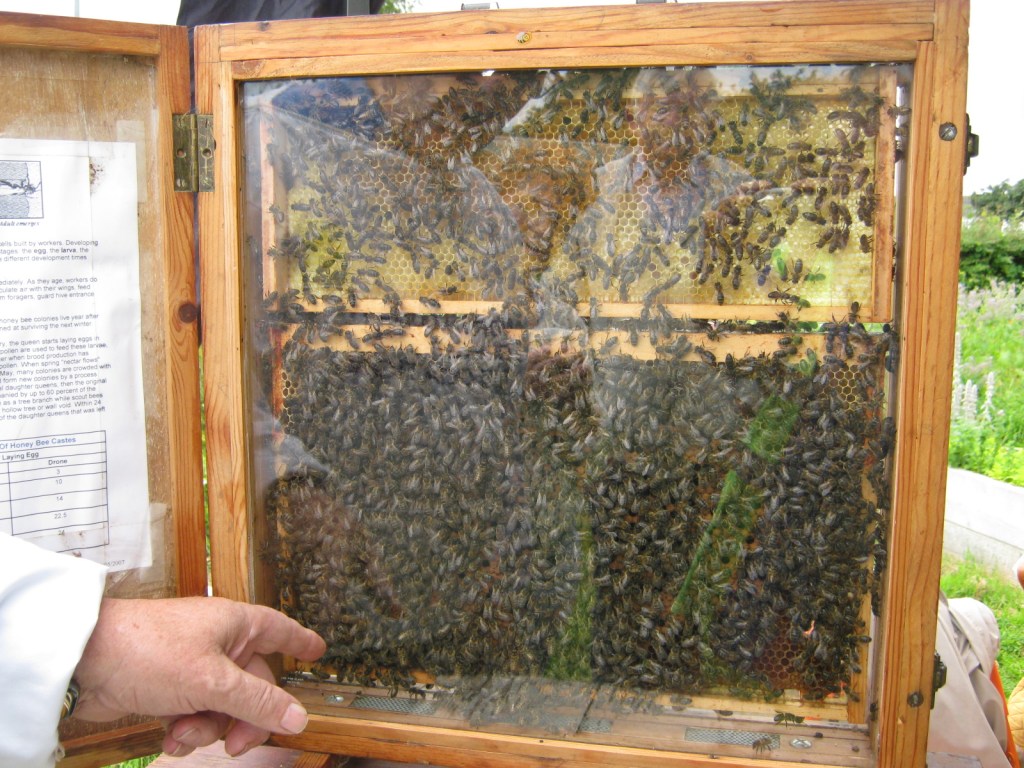
The committee of Broadmeadow Community Garden invited other local community groups to attend a talk on bee keeping to be held on their premises on Saturday, August 12, 2023. Members of STT, Swords Women’s Shed and Swords Woodland Association, including Councillor Joe Newman, turned up on the day for this fascinating session.

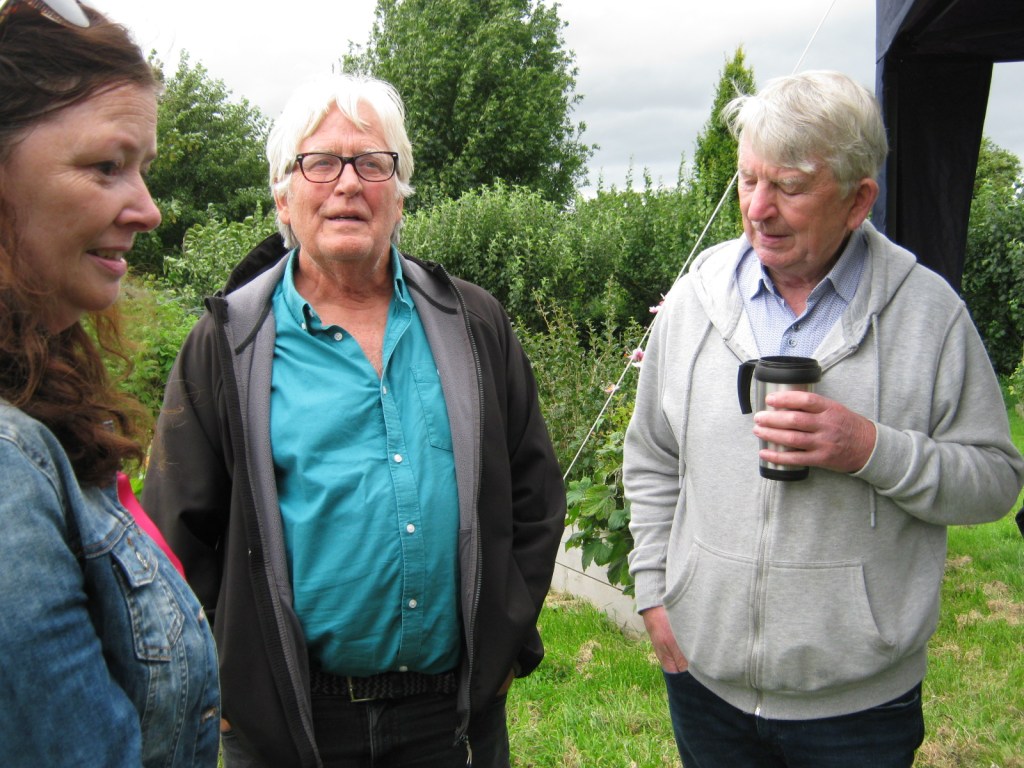
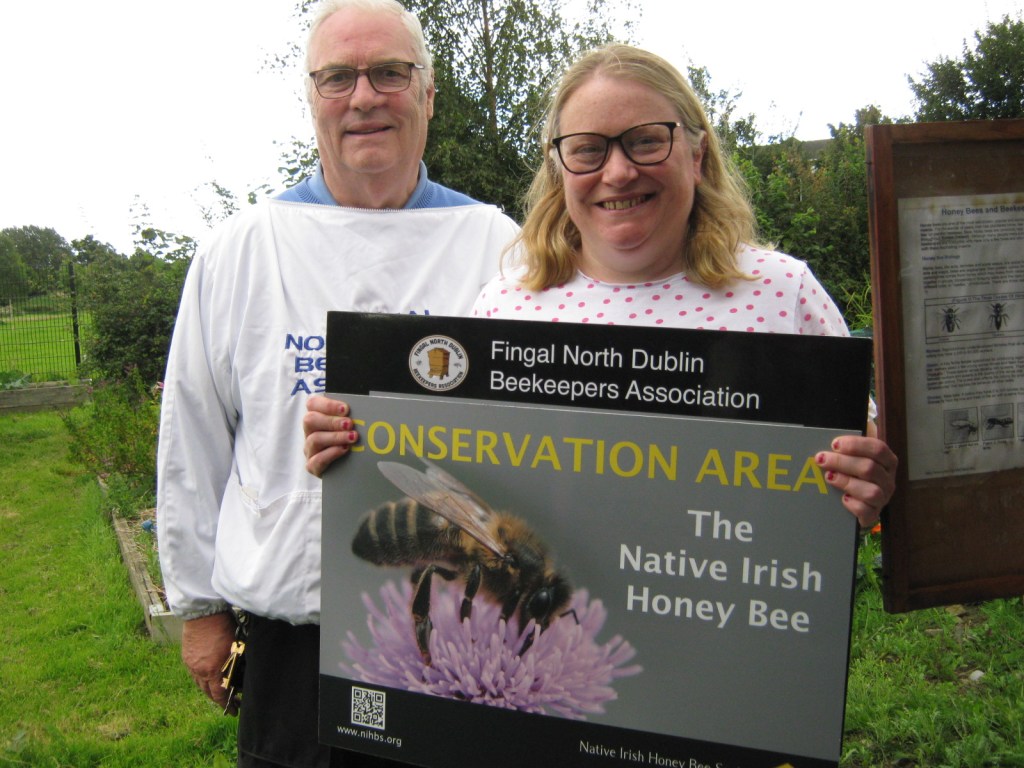


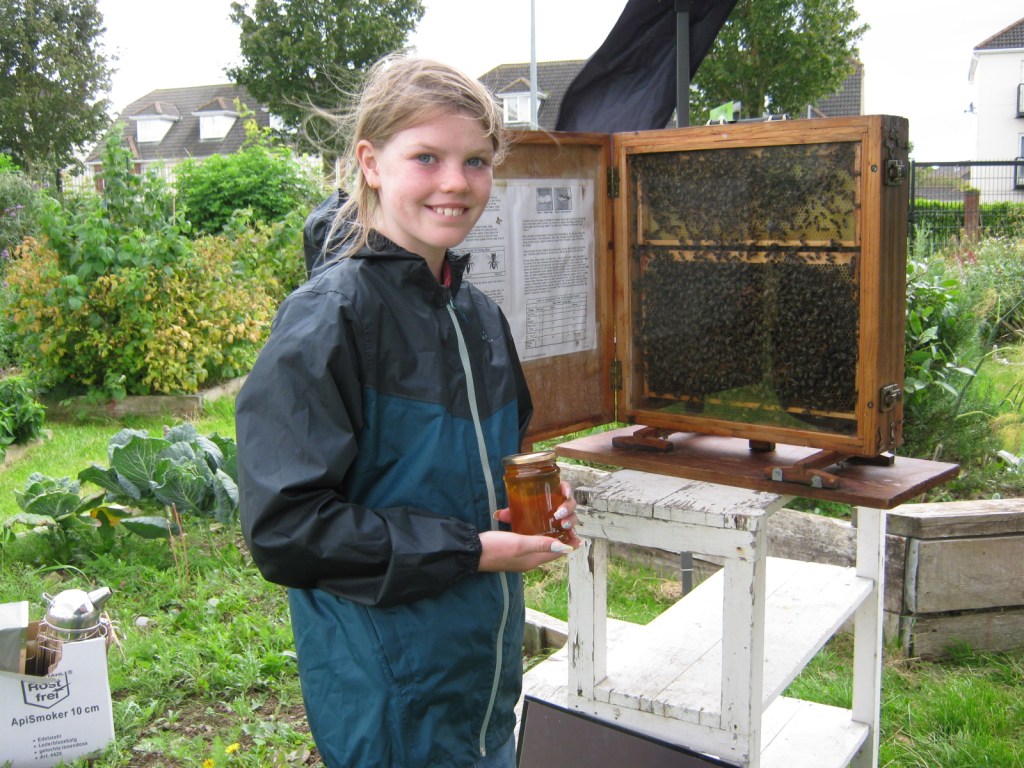
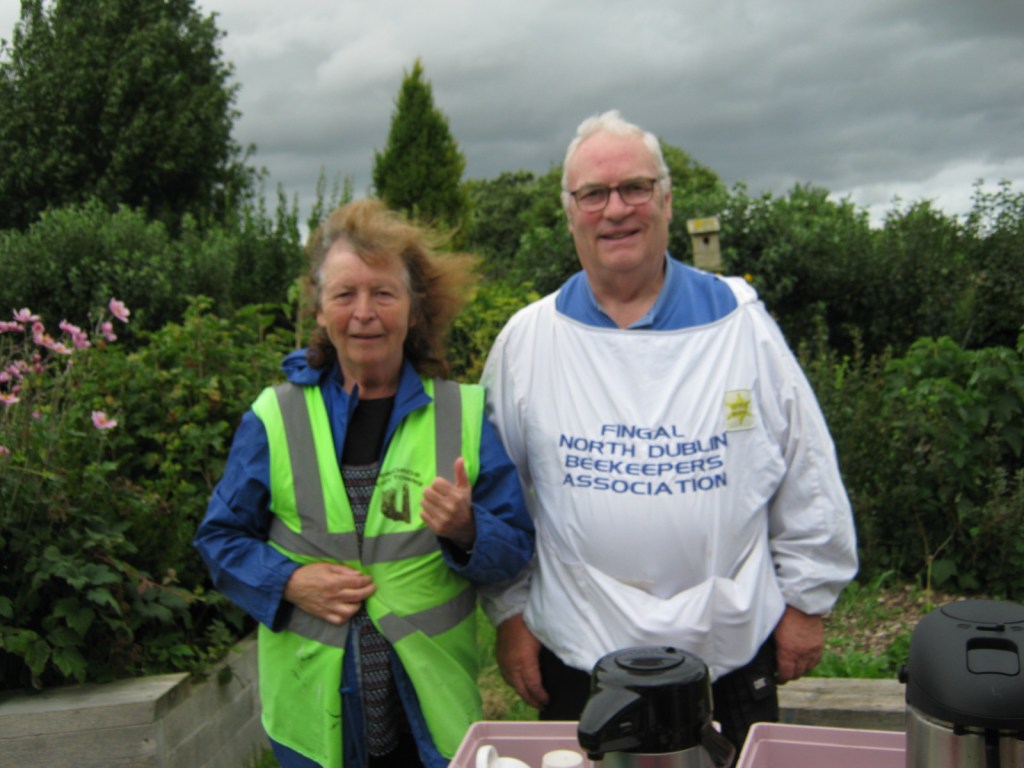
Michael Kelly, who has been a member of “Fingal North Dublin Beekeepers’ Association” for over 40 years, spoke of his group’s pride in the purity of the honey produced by our native dark honey bee, called apis mellifera mellifera.
His group contributes to academic research at Maynooth by sending their findings from pollen traps at the bottom of their hives, which show the variety of food sources found by their bees.
The Bremore group (a subgroup) focuses on perfecting the art of rearing queens. Local tradition says that beekeeping was first introduced into Ireland in this area by St Mologa, a seventh century Irish saint.
Michael used a glassed in section from one of his hives to show us the workings of an actual hive. We could see the hexagonal cells filled with honey or with brood.
He uses a pen to mark the queen with a colour and number in order to track her history. She can expect to live for up to five years. Can you spot number 70 amongst all the worker bees?


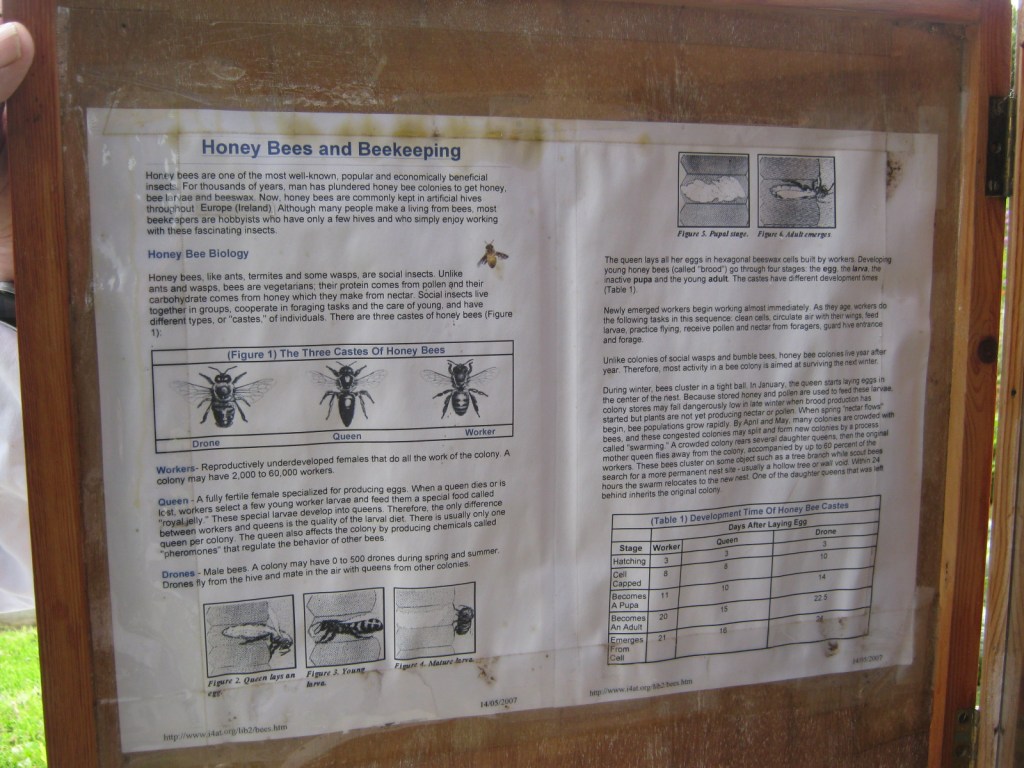
From April to late July, Michael goes through his hives every 7 days to ensure that there are no new queen cells. (These look like a monkey nut.) These cells would indicate that his bees were about to swarm. This hasn’t happened to him yet!
The top third of his hives have a metal barrier to allow only worker bees to enter. Honey deposited here is for his own use. He freezes some of this to ensure that there’ll be food for his bees in the harsh winter months, when their sources of food are scarce.
Michael ensures that all of his hives are kept at least six feet apart, so that his bees will remain within their own home. Mixing of bees could allow diseases to spread.
Michael’s enthusiasm and ability to answer all of our questions made this a really enjoyable experience.
To learn more about his group just google www.nihbs.org
Thank you to Ros and her committee for their warm hospitality, and for the opportunity to learn more about our native bees.

 Swords Tidy Towns